Home

Water should be pure and taste good

H2O SOLUTIONS

×

Book a consultation and inspection.

Water Quality, Potability, Well Condition, Pump Components, Plumbing Piping, Fixtures.

These are concerns most home owners worry about and should never be ignored.

If you Buying or Selling a home, most mortgage issuers require a complete inspection of the plumbing and a potability water test report.

Let us know how we can help.

×

Book a consultation and inspection.

Water Quality, Potability, Well Condition, Pump Components, Plumbing Piping, Fixtures.

These are concerns most home owners worry about. If you Buying or Selling a home, most mortgage issuers require a complete inspection of the plumbing and a potability water test.

Cool huh? Ok, enough teasing around..

Go to our W3.CSS Tutorial to learn more!

Do I need a Water Softener?


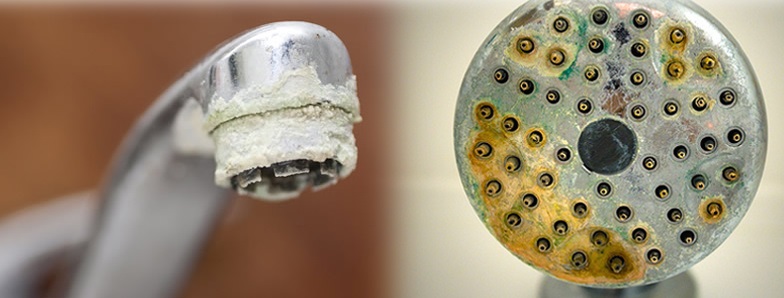
Most areas in the Southern and Northern BC Interior regions have very hard water caused by Calcium, Magnesium and Iron along with issues such as Maganese and other contaminants.

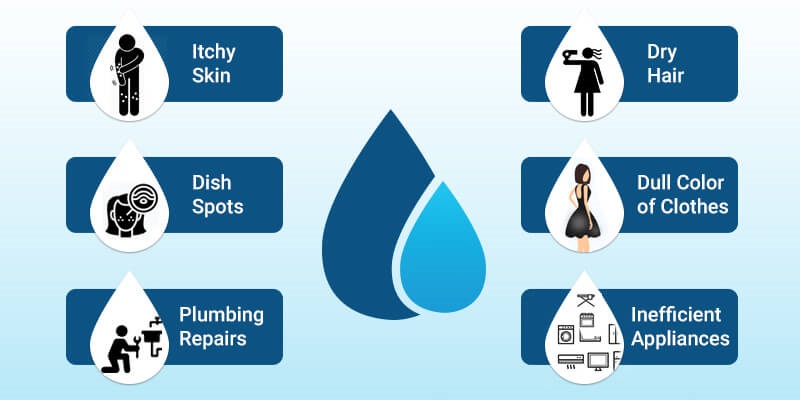
You feel it on your skin, your hair, taste it in your coffee, and see it on the glass of your shower stall and around the openings of your faucets.

The hardness of water is determined by the levels of calcium and magnesium dissolved in it.

Benefits of Water Softeners

  • Healthier, Softer Skin.
  • Shiny, Strong Hair.
  • Clothes Are Softer and Look Cleaner.
  • Removes Unwanted Tastes and Odors from Your Drinking Water.
  • Soft Water Is Easier on Your Pipes and Appliances.
  • Softer Water Will Save You Money.

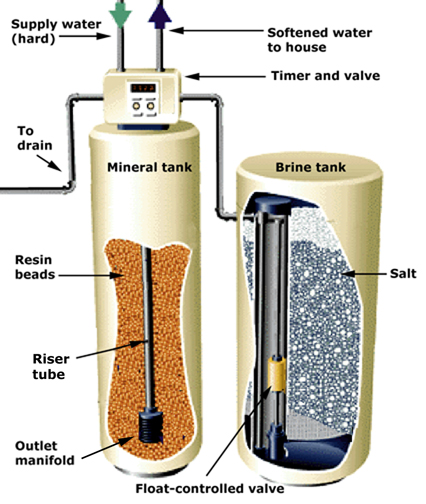
  • How Does A Water Softener Work?

  • 1. A water softener removes hardness minerals (calcium and magnesium) through a process called ion exchange:
  • 2. Raw water runs through a bed of sodium charged softening resin contained in a pressure tank
  • 3. Hardness ions attach to the resin, exchanging with the harmless sodium ions
  • 4. Eventually the resin contains only hardness minerals and has to be regenerated
  • 5. The control valve monitors water usage and determines when to regenerate
  • 6. The resin is backwashed to rinse away impurities
  • 7. A strong brine solution is then drawn through the bed and hardness ions are exchanged for sodium ions
  • 8. The hardness ions are then rinsed to the drain
  • 9. The softener is now ready to soften again