 Let us know how we can help.
A water and plumbing inspection is a thorough examination of a home's plumbing system to ensure it's in good condition and working properly
A plumbing inspection can be especially helpful before buying a home to ensure the plumbing system is safe and works. It can also be a good idea if you plan to sell your home to show potential buyers that the plumbing is in good condition.
In the Cariboo Region most financial institutions and lenders require Inspections and/or Potable Water Test prior to issuing a mortgage.
Well water testing is the only way to ensure that your water is safe to drink. Here are some things to consider when testing your well water:
Test for microbial contamination annually. You can test for general water quality parameters every two to five years.
Test for total coliform bacteria, ecoli, nitrates, heavy metals, total dissolved solids, and pH levels. Other contaminents such as Iron, Manganese, Lead, Arsenic and Uranium are also a concern in the BC Interior.
Test your water when there's a greater chance of contamination, such as after a well system repair or if there are problems nearby. You should also test if you notice a change in the water's taste, color, or smell.
Clean water is a basic necessity for humans.
Water treatment systems remove contaminants and hazardous substances from your water, making it clean and safe to drink.
Water is treated using a variety of equipment depending on the contaminents. For Sediment, Silt or Sand the most common method is Cartridge or Tank Filters. For Hardwater (Calcium & Magnesium) a Water Softener is prefered. Other common Water Treatment systems can include Reverse Osmosis, Ultra Violet Lamps, Specialty Iron or Heavy Metal Filters.
With the right treatment solution all water can be Pure and Taste good.
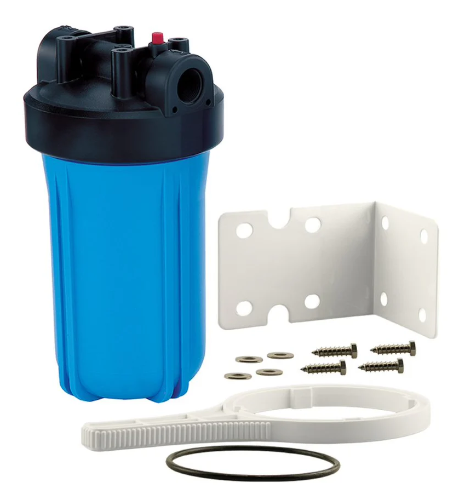
A filter cartridge system is a filtration method that utilizes replaceable cartridges, typically cylindrical in shape, to remove impurities and particles from water by passing it through a filtering media within the cartridge, allowing only the clean water to pass through while trapping contaminants inside the cartridge.
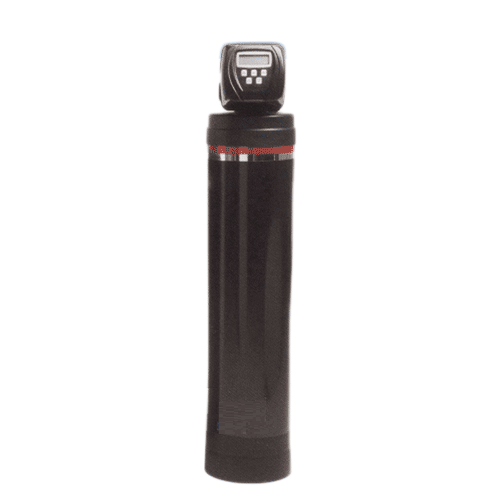
Automatic water filters, also known as self-cleaning filters, operate by using a pressure differential system to monitor when the filter needs cleaning, and then automatically initiate a backwashing process to remove trapped debris from the filter element, allowing continuous water flow without manual intervention.
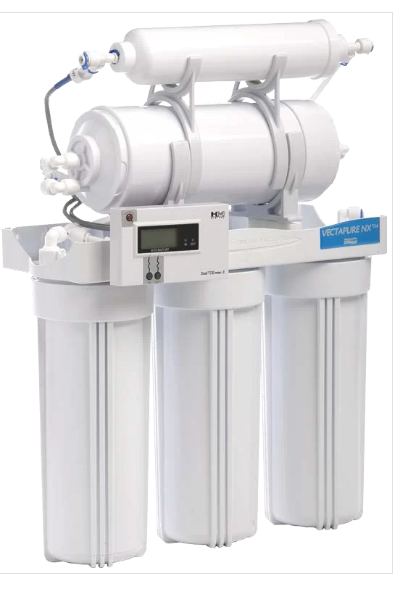
High pressure forces water through a membrane, separating it from contaminants like metals, organics, and nitrates. The treated water, called "permeate", is collected in a storage container, while the rejected contaminants, called "concentrate" or "brine", are washed away. The result is high purity drinking water.
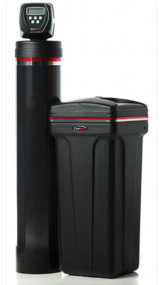
A water softener works by using a process called ion exchange, where it removes calcium and magnesium ions (which cause hard water) from the water by replacing them with sodium ions from a salt solution, essentially "trading" the hard minerals for sodium; when the resin becomes saturated with hard minerals, it needs to be "regenerated" by flushing it with a concentrated salt solution to release the trapped minerals and re-saturate the resin with sodium ions.
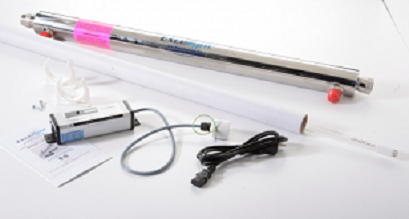
Ultraviolet water lamps work by emitting UV-C light at a specific wavelength (around 254nm) which, when exposed to water flowing through a chamber, penetrates the cells of microorganisms like bacteria and viruses, damaging their DNA and rendering them unable to reproduce, effectively disinfecting the water.
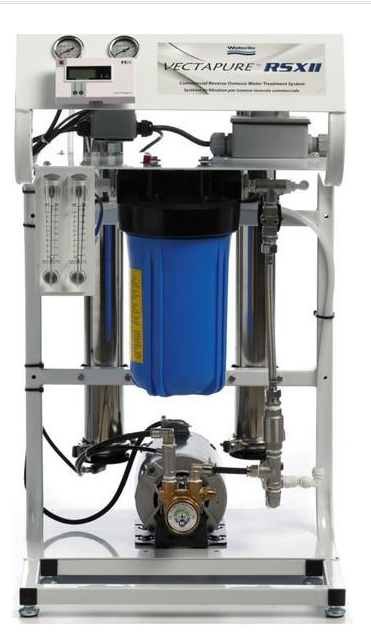
Whole house RO systems can remove a variety of contaminants, including water hardness, salts, chemicals, chromium, uranium, copper, mercury, arsenic, boron, silver, lead, sodium, and nitrates. They can be more expensive than other water treatment systems due to their large capacity and installation complexity. Applications include Restaurants, Car Washes, Breweries and even Residential Homes. Anywhere that needs large volumes of ultra pure water.